
Speakers
Calogero M. Oddo
Sant'Anna School of Advanced Studies, Italy
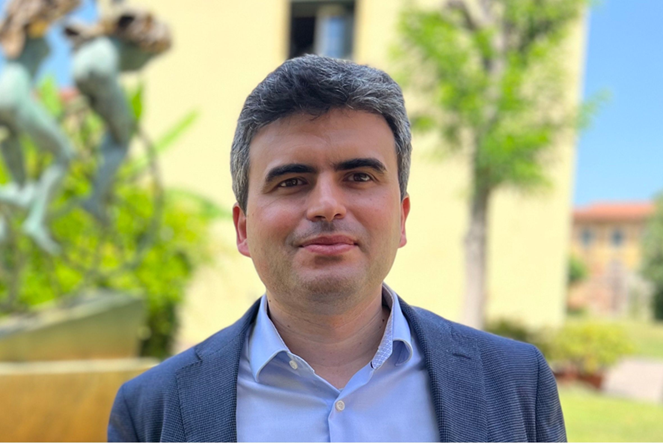
Calogero Maria Oddo is Associate Professor of Bioengineering at Sant'Anna School of Advanced Studies (SSSA), Pisa, Italy, an excellence university ranked 5th worldwide among small universities by Times Higher Education and 7th in the Shangha iRanking for robotic science and engineering.
He coordinates the Neuro-Robotic Touch Laboratory at The BioRobotics Institute of SSSA, supervising 25 researchers. He has a Ph.D. from SSSA, M.Sc. and B.Sc. in Electronic Engineering from the University of Pisa, 1,000 sq.m., and a Ph. He has a Ph.D. from SSSA, M.Sc. and B.Sc. in Electronic Engineering from the University of Pisa, 1st and 2nd level degrees in Industrial and Information Engineering as a honours college student of SSSA (3% success rate)., all with honours. He holds the national scientific qualification to be appointed as Full Professor of Bioengineering. He holds the national scientific qualification to be appointed as Full Professor of Bioengineering.
He has over 130 published studies and several patents, and a track record in integrating biorobotics and neuroscience, with core research interests in touch science and engineering. He has over 130 published studies and several patents, and a track record in integrating biorobotics and neuroscience, with core research interests in touch science and engineering. He has 6200+ citations and 34 h-index in Scopus. He has a growing portfolio of successful research grants, with more than 10 M€ direct scientific responsibilities within EU and National projects and industrial contracts. In 2023 he received the Feltrinelli Prize for young investigators in bioengineering from the Accademia Nazionale dei Lincei, among the oldest scientific societies internationally, where he has In 2023 he received the Feltrinelli Prize for young investigators in bioengineering from the Accademia Nazionale dei Lincei, among the oldest scientific societies internationally, where he has leadership responsibilities as vice-director of the interdisciplinary centre of young scholars.
Fei Gao
Zhejiang University, China
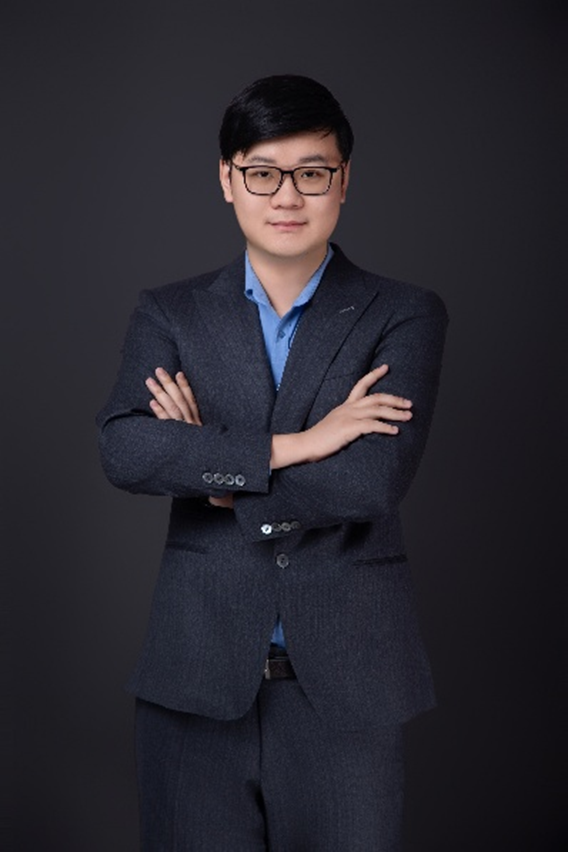
Fei Gao is a tenured associate professor and doctoral supervisor at Zhejiang University, founder and CEO of Differential Robotics, and NSFC Excellent Young Scientist. Dr. Gao's research on aerial robotics, autonomous navigation, and swarm intelligence has produced 100+ publications in elite journals and conferences, including Science Robotics, Nature Communications, IEEE TRO, and IEEE International Conference on Robotics. Dr Gao's research on aerial robotics, autonomous navigation, and swarm intelligence has produced 100+ publications in elite journals and conferences, including Science Robotics, Nature Communications, IEEE TRO, and IJRR. He has led major national research programmes and received awards including MIT TR35 Asia Pacific 2025, the ICBS 2024 Frontier Science Award, and IEEE TRO Best Paper Honorable Mention. Ranked among Elsevier's Top 2% Most-Cited Scientists and China's Highly Cited Scholars, his work has been applied in aerial inspection, search-and-rescue, and logistics.
Hae-Won Park
Korea Advanced Institute of Science and Technology (KAIST), South Korea
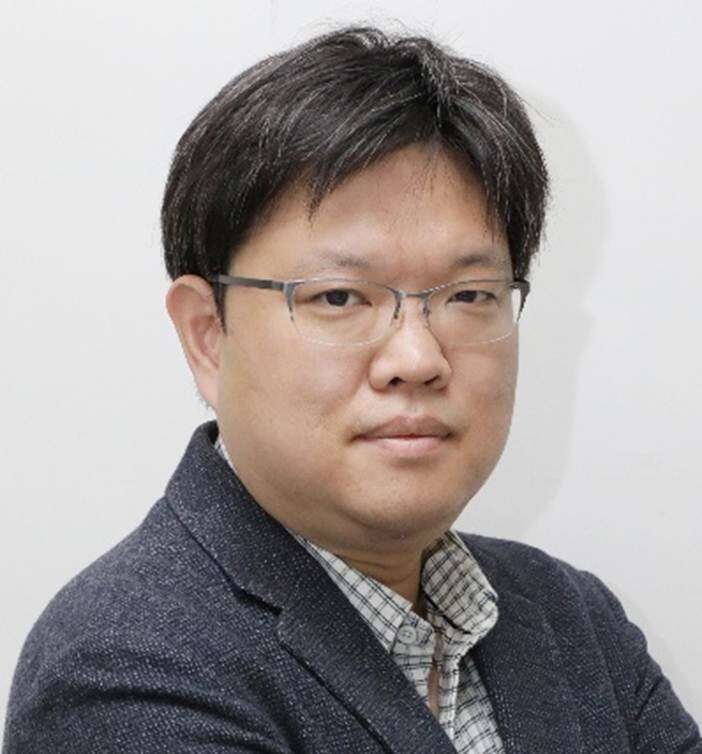
Prof. Hae-Won Park Before joining KAIST, he was an Assistant Professor at the University of Michigan, Ann Arbor. He received his B.S. and M.S. from Yonsei University and his Ph.D. from the University of Michigan, Ann Arbor. Before joining KAIST, he was an Assistant Professor at the University of Illinois at Urbana-Champaign and a Ph.D. in Mechanical Engineering. Before joining KAIST, he was an Assistant Professor at the University of Illinois at Urbana-Champaign and a postdoctoral researcher at MIT. His research focuses on learning, model-based control, and robotic design, especially in legged and bio-insertion systems. His research focuses on learning, model-based control, and robotic design, especially in legged and bio-inspired robots. Prof. Park has received several prestigious awards, including the NSF CAREER Award and the RSS Early- Career Spotlight Award, and has been a member of the MIT Board of Trustees. Prof Park has received several prestigious awards, including the NSF CAREER Award and the RSS Early- Career Spotlight Award, and serves on editorial boards for top robotics journals and conferences such as IJRR and IEEE ICRA.
Sethu Vijayakumar
University of Edinburgh / The Alan Turing Institute, UK
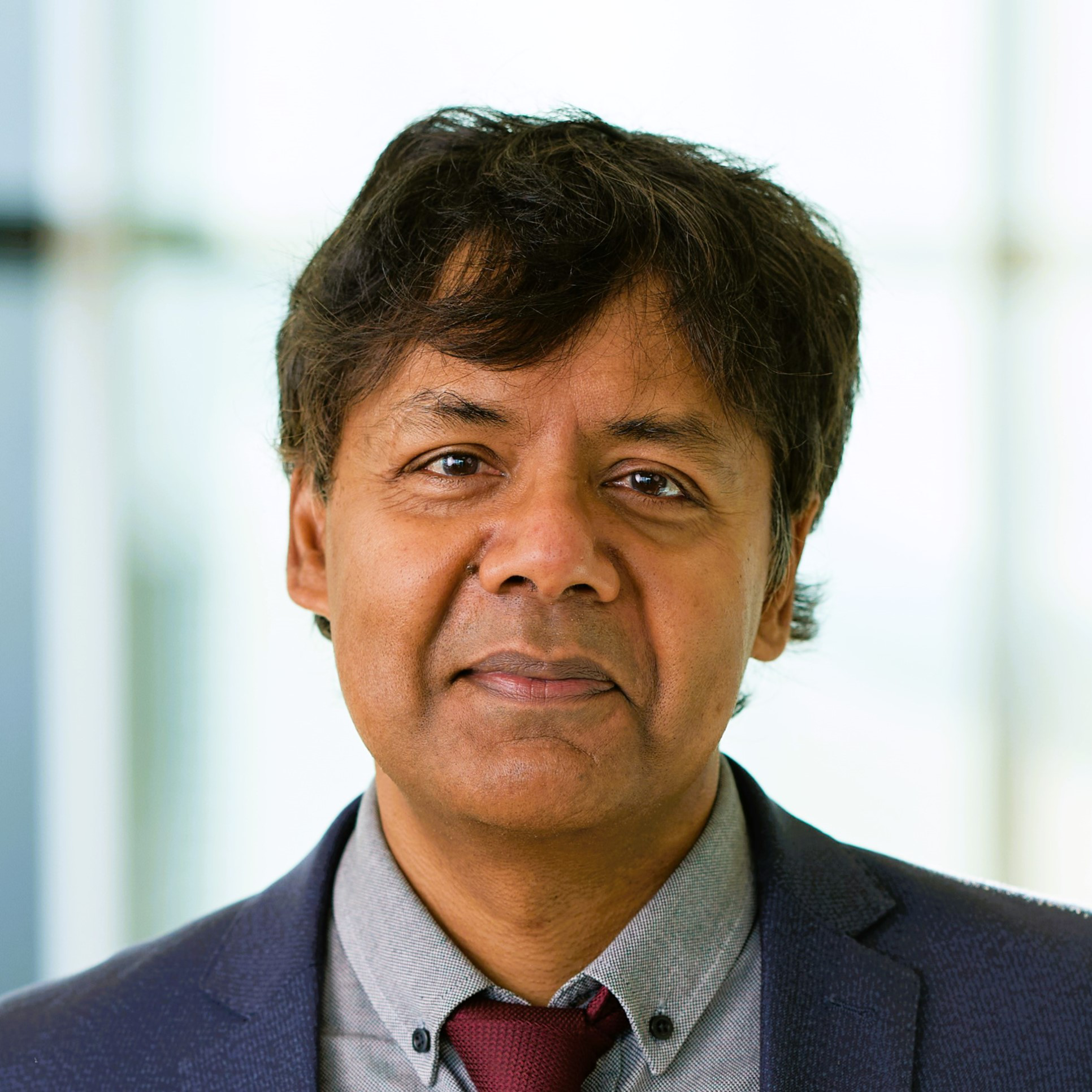
Sethu Vijayakumar is the Professor of Robotics at the University of Edinburgh, UK, Fellow of the Royal Society of Edinburgh and the Founding Director of the Edinburgh Centre for Robotics. He has pioneered the use of large-scale machine learning techniques in the real-time control of several iconic robotic platforms such as the SARCOS and the HONDA ASIMO humanoids, KUKA-LWR robot arm and iLIMB prosthetic hand. One of his projects (2016) involved a collaboration with NASA Johnson Space Centre on the Valkyrie humanoid robot being prepared for unmanned robotic pre-deployment missions to Mars. Professor Vijayakumar, who has a PhD from the Tokyo Institute of Technology, holds the Royal Academy of Engineering (RAEng) - Microsoft Research Chair at Edinburgh and is also an Adjunct Faculty of the University of Southern California (USC), Los Angeles. He has published over 250 peer reviewed and highly cited articles [H-index 50, Citations > 13,000 as of 2025] on topics covering robot learning, optimal control, and real-time planning in high dimensional sensorimotor systems. He is a judge on BBC Robot Wars and winner of the 2015 Tam Dalyell Prize for excellence in engaging the public with science – including his role in the UK wide launch of the BBC micro:bit initiative (2016) for STEM education. Professor Vijayakumar helps shape and drive the national Robotics and Autonomous Systems (RAS) agenda in his role as a Programme Director (AI) at The Alan Turing Institute, the United Kingdom’s national institute for data science and Artificial Intelligence.
Li Wen
Beihang University, China
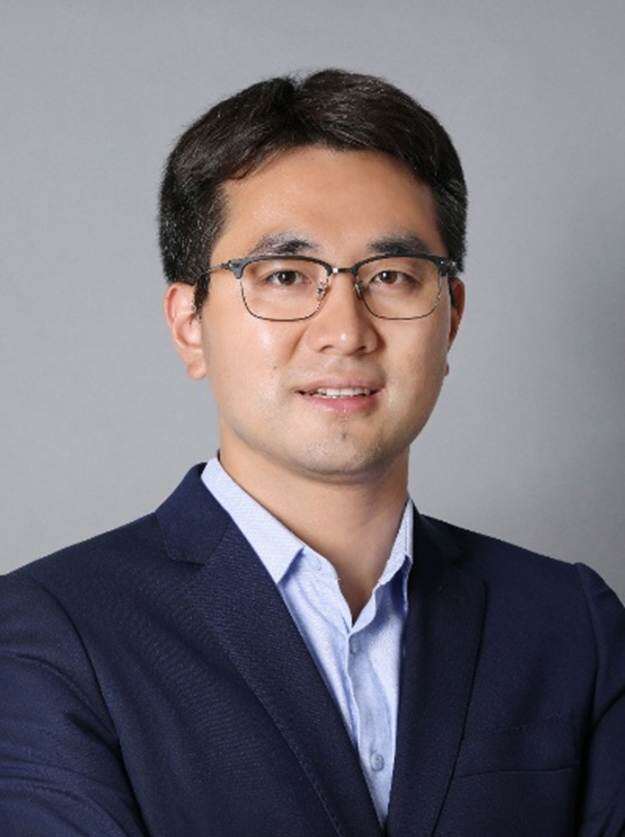
Li Wen He is a Professor and Vice Dean of the Department of Mechanical Engineering and Automation at Beihang University. He was honoured as a Distinguished Scholar by the National Science Foundation of China. He was honoured as a Distinguished Scholar by the National Science Foundation of China. His research focuses on bio-robotics, soft robotics, and robotic intelligence. Throughout his career, he has authored over 150 articles in prominent journals and conferences, including Science Robotics, Nature Machine Intelligence, Science Advances, Nature Communications, IEEE Transactions on Robotics and Robotic Intelligence, and Nature Communications. Throughout his career he has authored over 150 articles in prominent journals and conferences, including Science Robotics, Nature Machine Intelligence, Science Advances, Nature Communications, IEEE Transactions on Robotics, IJRR. His representative work has been featured multiple times in several leading scientific His representative work has been featured multiple times in several leading scientific media outlets, including Nature, Science, MIT Technology Review, and BBC. Recognised for his contributions, he received the Steven Vogel Young Investigator Award and the Xiong You Award. Recognised for his contributions, he received the Steven Vogel Young Investigator Award and the Xiong Youlun Young Scientist Award, and several scientific award from Ministry of Education of China. has served as an editorial or advisory board member for several prestigious journals, including Science Robotics and the International Journal of Robotics Research (IJRR).

