
On 14 October, the “Bringing AI into the Physical World – Embodied Intelligence Application Technology Innovation Forum”, held in conjunction with the 2026 Greater Bay Area Semiconductor Industry Ecosystem Expo (Shenzhen), took place at the Shenzhen Convention and Exhibition Centre (Futian). The forum was organised by the Shenzhen Robotics Association and the Shenzhen Semiconductor and Integrated Circuit Industry Alliance, with co-organisation by China Electronics Port Chip Chacha.The forum brings together industry representatives from the fields of robotics, computing platforms, motion control, interconnectivity and security to discuss how embodied intelligence is progressing from concept to engineering implementation, and how to address the challenges and find solutions.
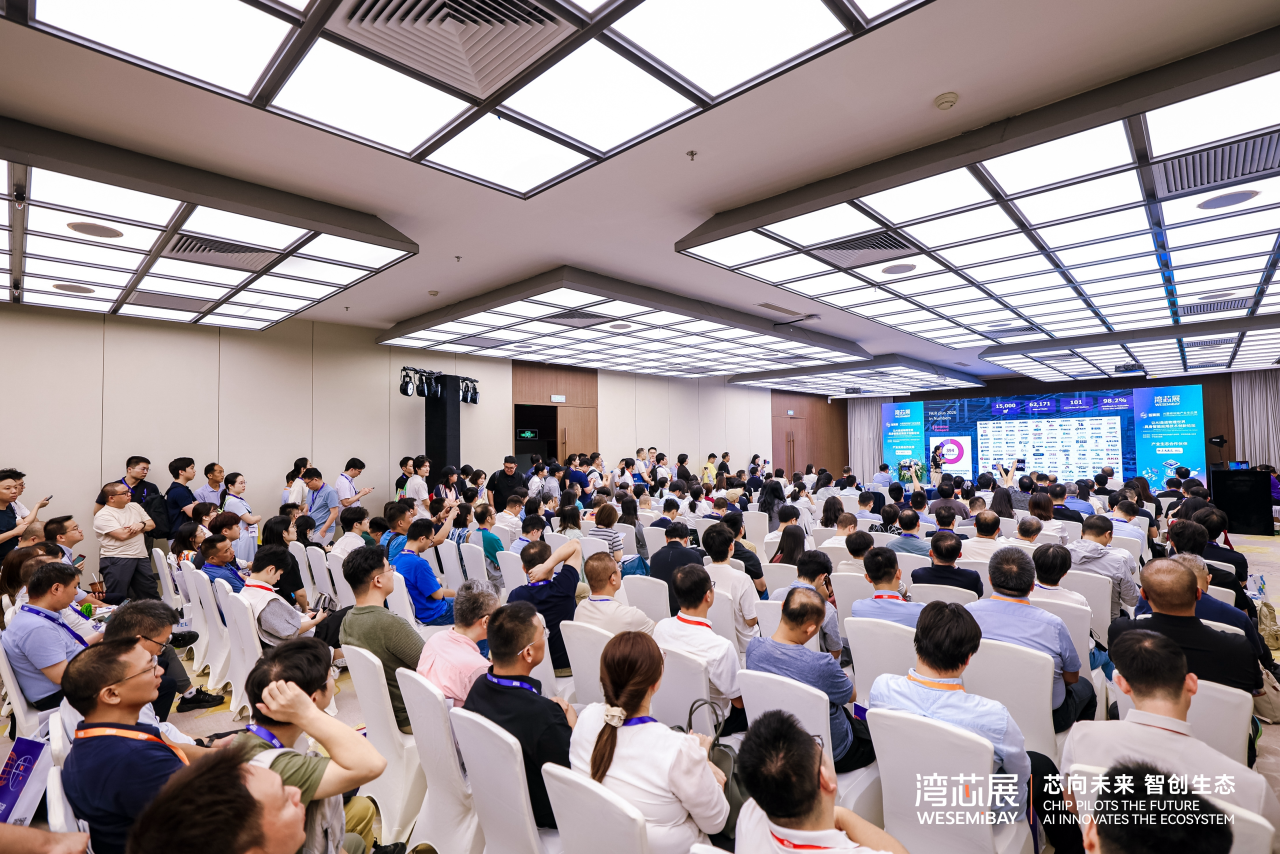
At the start of the forum, Tan Weijia, Full-time Secretary-General of the Shenzhen Robotics Association and founder of the FAIR plus Robotics Full Industry Chain Forum, began by presenting‘From Demo to Deployment’In her keynote presentation, she explored the technical and industrial conditions required for robots to be genuinely deployed in practical work. She pointed out that the implementation of embodied intelligence is not a matter of a single algorithmic breakthrough, but rather requires overcoming three interrelated challenges: hardware, data and models. Existing datasets often emphasise success stories and lack records of anomalies such as falls, slips and human intervention; therefore, data development should prioritise quality and physical validity before pursuing scale. Building reliable, lightweight and interpretable systems around clearly defined scenarios may also lead to industrial applications more quickly than waiting for a single, general-purpose model. Ensuring that more such explorations are successfully implemented is precisely what the FAIR plus Robotics Full Industry Linkage Forum, organised by the Association, continues to strive for.
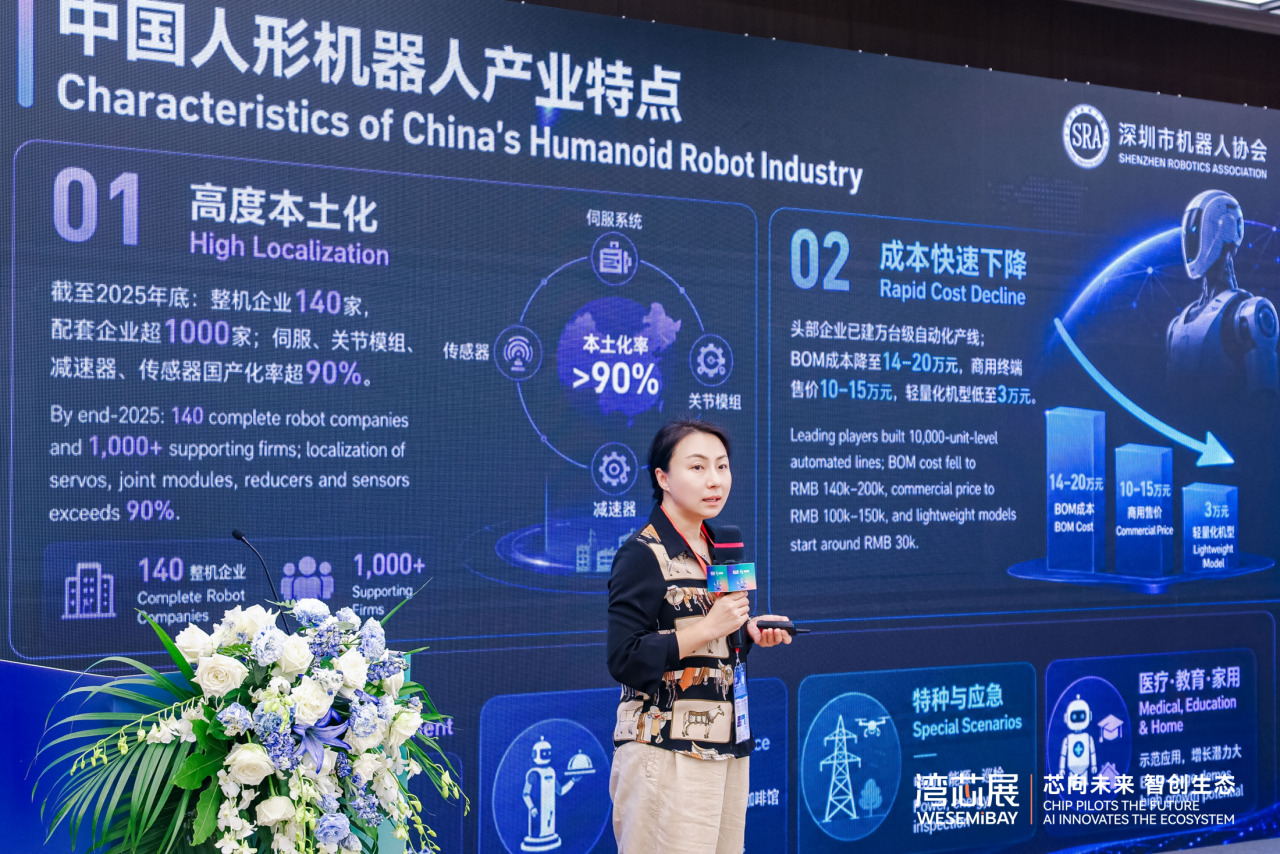
Pictured: Tan Weijia, Full-time Secretary-General of the Shenzhen Robotics Association and founder of the FAIR plus Robotics Full Industry Chain Forum
UBTech: Driving the Adoption of Humanoid Robots
Dr Pang Jianxin, Vice-President of UBTech Robotics and Deputy Director of the Research Institute, delivered a speech on‘Promoting the Practical Application of Humanoid Robots’Under this title, the paper introduces technical architectures and practical applications for industrial manufacturing.
He pointed out that flexible tasks such as assembly, sorting and inspection still rely heavily on manual labour; humanoid robots, with their bipedal locomotion, dual-arm operation and dexterous hands, are expected to adapt to unstructured manufacturing environments, and industrial manufacturing is a key area where they are set to achieve large-scale application first.
UBTech has proposed a layered architecture based on “brain–cerebellum” coordination: the world model is responsible for long-term sequential reasoning and task decomposition; the VLA multimodal model handles perception and skill planning; and the learning-based whole-body control system is responsible for high-frequency execution and safety assurance, thereby enabling cross-layer coordination for intelligent decision-making and stable motion.
The presentation also introduced the Co-Agent collaborative agent, the Thinker multimodal large language model, stereo vision and semantic navigation, and demonstrated practical applications such as the Walker S2’s autonomous loading, task planning and low-height sorting; the fusion of force, tactile and inertial data provides the foundation for compliant manipulation and stable motion.
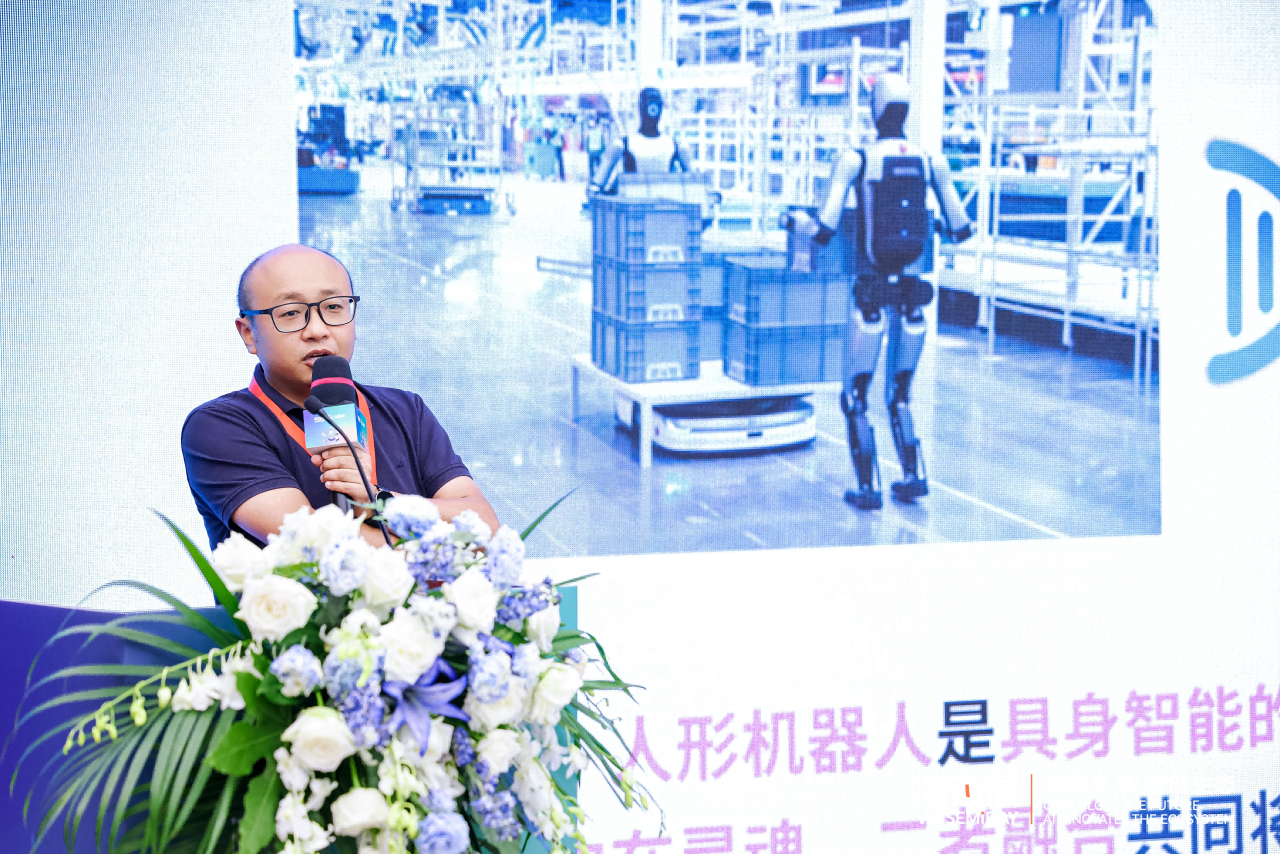
Pictured: Dr Pang Jianxin, Vice-President of UBTech Robotics and Deputy Director of the Research Institute
Huayan Robotics: Empowering Flexible Chip Manufacturing
Presented by Jiang Qiji of Huayan Robotics‘Huayan Robotics Pioneers a New Paradigm in Flexible Chip Manufacturing with Its In-House Full-Stack Technology’This presentation will focus on four key challenges—precision positioning, consistency in the insertion and removal of optical modules, cleanliness requirements for wafer handling, and labour requirements for repetitive tasks—and will introduce three product categories: collaborative robots, seven-axis humanoid arms and high-precision motion platforms.
According to Jiang Qiji, Huayan’s high-precision XYZ linear motor platform achieves a repeatability of ±0.05 μm and a resolution of 1 nanometre, and can be used in applications such as wafer inspection and fibre-optic coupling; the high-order helical initial light-seeking solution, meanwhile, is designed to reduce motion shock and vibration and shorten the coupling cycle time.
Jiang Qiji emphasised that, drawing on its in-house capabilities across the entire product stack—including electric motors, servo drives, articulated modules and control systems—Huayan hopes to combine precision manipulation with automated material handling to drive the development of semiconductor production lines towards reduced manpower and greater flexibility.
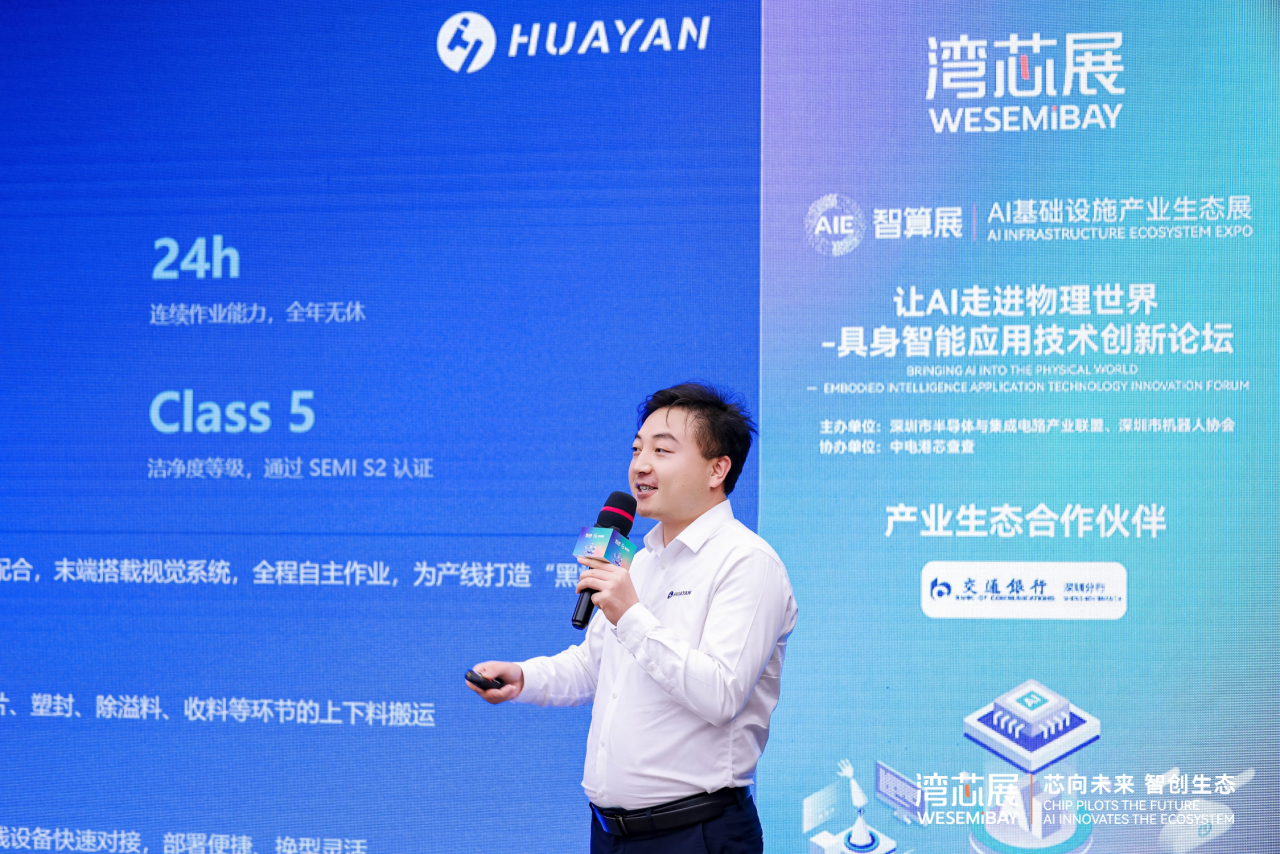
Photo: Jiang Qiji of Huayan Robotics
AgaX: Streamlining the service robot execution workflow
Kang Bin, Head of Technology at Chengdu Agaxi Intelligent Technology Co., Ltd., in his capacity as“Practical Implementation of a Robot Solution Based on the ”Qualcomm Yuelong Platform” and Harness VLA Drivers’Under this title, we will share our integrated approach to hotel inspections, guest reception, semantic navigation and visual data extraction.
Kang Bin pointed out that service robots require not only models but also a comprehensive execution system to address issues such as fragmented task chains, conflicts between decision-making and control, semantic memory distortion and difficulties in reusing skills.
AgaX employs a layered architecture: the model is responsible for intent understanding and task planning; the Harness execution framework handles state constraints, skill scheduling, result verification and failure recovery; whilst the skill library encapsulates capabilities such as navigation, inspection and grasping, ensuring that the task process is traceable and can be reviewed.
Taking the example of “fetching a bottle of water from the table”, the system must carry out location querying, navigation, target identification, retrieval and return delivery, whilst also establishing mechanisms for retries and manual intervention; the edge computing solution uses the Qualcomm Yuelong IQ10 as its target platform, with plans to run vision, VLA, speech and navigation services locally, thereby reducing reliance on the network and protecting data privacy.
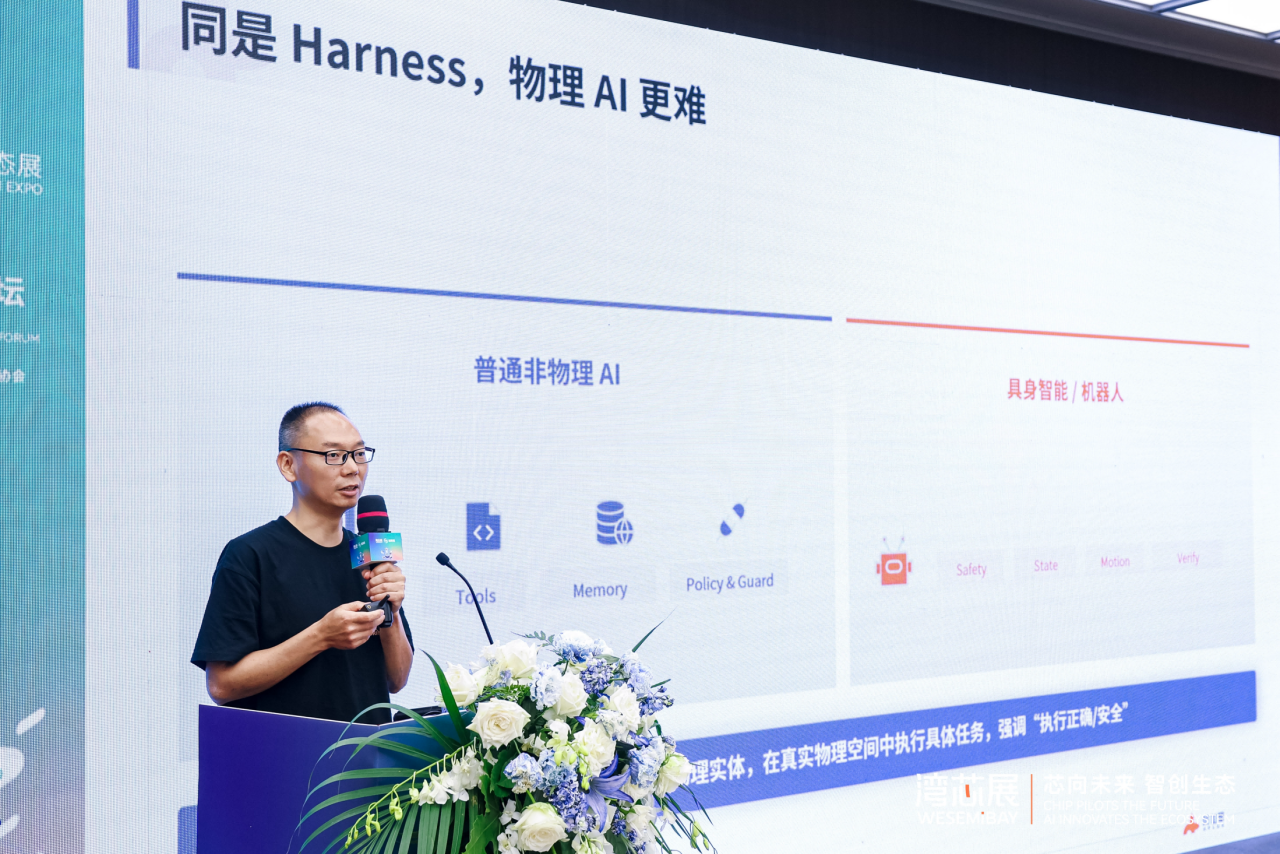
Pictured: Kang Bin, Head of Technology at Chengdu Agaxi Intelligent Technology Co., Ltd.
AMD: An open ecosystem accelerates robotics research and development
Louis Zhang, Director of Business Development for Physical AI within AMD’s Embedded Sales Division for Greater China, in his capacity as‘Powering Physical AI for Robotics’Under this heading, an overview of the hardware and software architecture covering robotics computation, control and communication is provided.
As a robot’s “brain” needs to simultaneously handle multi-model reasoning, navigation planning and real-time control, the Ryzen AI Embedded X100 series utilises a CPU, GPU, NPU and unified memory architecture to support the concurrent execution of different workloads; the Kria AI robotics development platform further integrates an FPGA, providing a foundation for prototype development.
AMD’s focus extends beyond computing power to include integrated development resources based on an open ecosystem: the Robotics Software Suite, which combines ROCm, the Robotics SDK and accelerated ROS nodes, provides tools for vision, navigation and manipulation, and supports the porting of CUDA code via HIP, thereby lowering the barriers to platform adaptation and system integration.
In addition, AMD showcased computing capabilities for multi-axis joint control, communication between the “brain” and the joints, and sensor integration and fusion, with the aim of accelerating the research, development and deployment of embodied intelligence products through collaboration between hardware, software and partners.
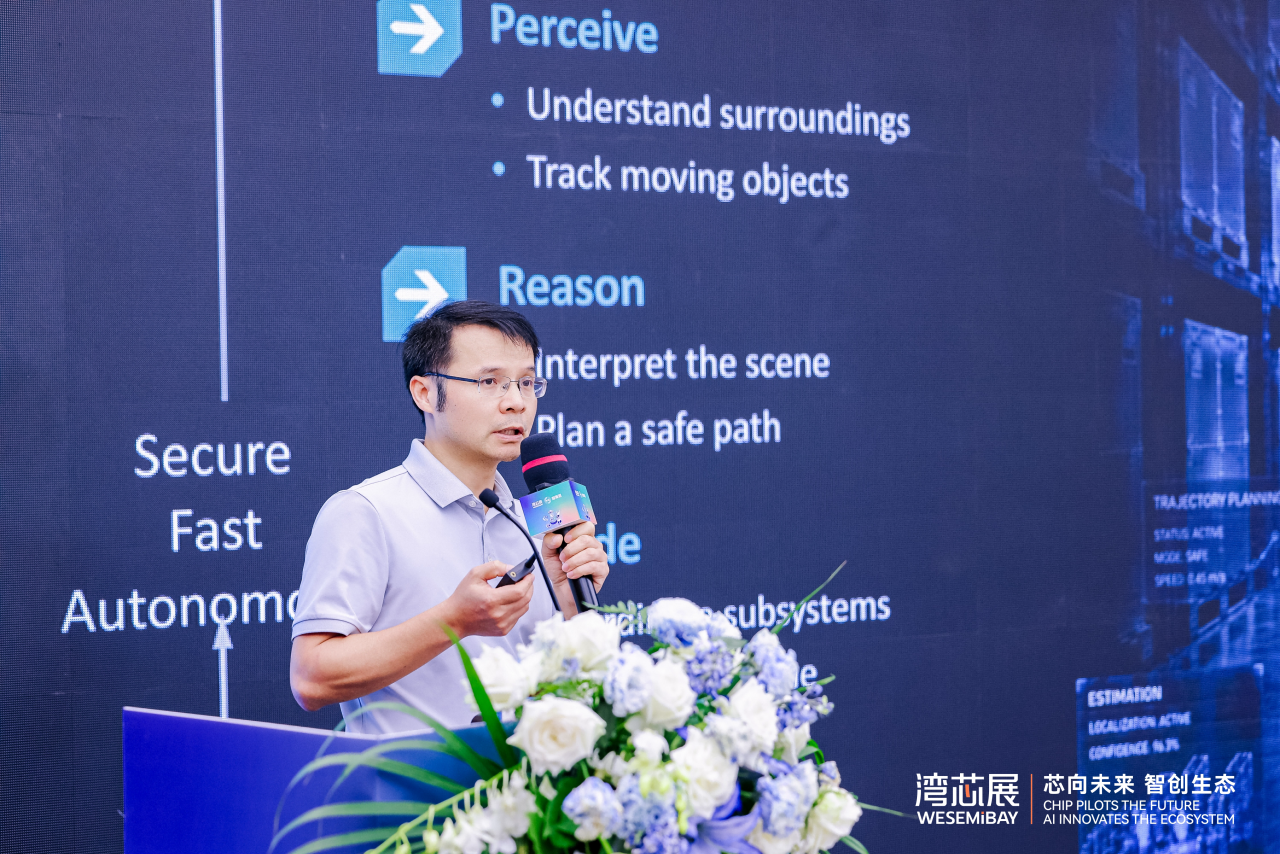
Pictured: Zhang Lei, Director of Business Development for Physical AI, Embedded Sales Division, AMD Greater China
Huacheng Industrial Control: Focusing on Domestic Motion Control
Du Xiaolei, Director of Shenzhen Huacheng Industrial Control Co., Ltd. and Director of the Robotics Sector, gave a presentation on the topic ofReconfiguration of a body-mounted intelligent motion control base based on a home-made bus.… shared insights into the embodied “cerebellum” control system and approaches to its implementation in industrial settings.
Based on the division of labour whereby the “brain” is responsible for perception and planning, whilst the “cerebellum” handles real-time execution, Huacheng has launched a control solution that integrates force control, dual-arm coordination and trajectory planning algorithms. It supports full-joint drag-and-teach, collision detection and adaptive impedance control, and coordinates with higher-level AI platforms via open interfaces.
In terms of bus systems, Huacheng’s industrial control solution incorporates Zhiyao bus and EtherSpark technology, promoting the integration of power supply and communication as well as the convergence of control and vision signals. Through low-latency communication, it supports centralised drive and control, simplifies end-point electronic systems and cabling, and enhances thermal reliability.
Targeting developers with a knack for precision work, Huacheng showcased a 32-degree-of-freedom drive-and-control integrated solution based on domestically produced FPGAs; through case studies such as towel-folding with dual arms, terminal assembly and hybrid force-position control, the company aims to leverage its expertise in motion control, combined with algorithms, data and a closed-loop platform, to drive embodied robots from the demonstration stage towards stable operational use.
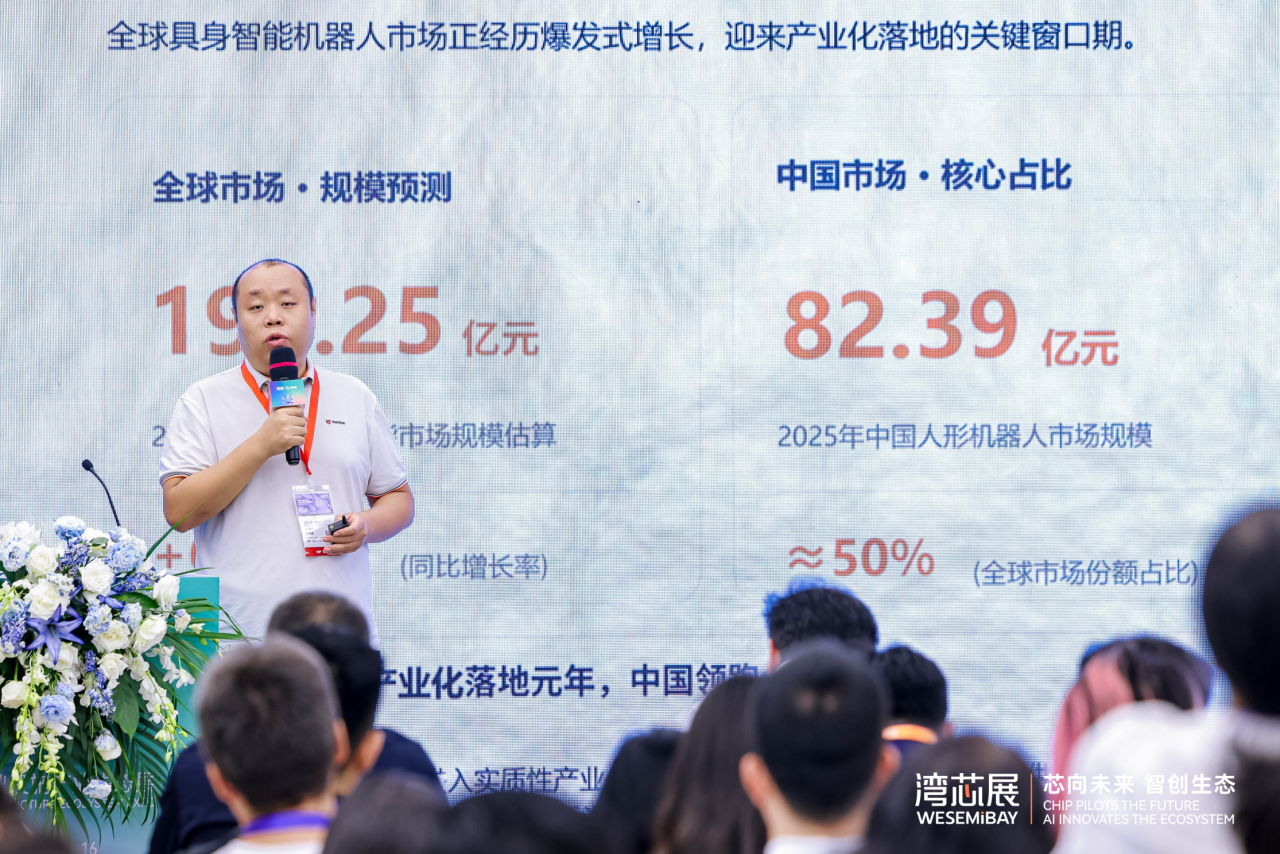
Pictured: Du Xiaolei, Director and Head of the Robotics Sector at Shenzhen Huacheng Industrial Control Co., Ltd.
Molex: Reliable Interconnects Drive Mass Production
Zhou Bin, Account Manager at Molex, in‘The Application and Enabling Role of Molex Connectors in the Robotics Sector’Under this title, this presentation will outline interconnection solutions—ranging from the controller and vision systems to joints and dexterous grippers—with a focus on high-speed data transmission, operational reliability and mass-production consistency.
As robots transition from hand-built prototypes to mass production, connectors must not only “make a connection” but also ensure signal integrity, contact stability during continuous motion, as well as harness assembly efficiency and manufacturing consistency.
MiniMix integrates power and signal transmission into a single interface, offering solutions ranging from 15A to 30A to reduce the number of interfaces and wiring harnesses; Mirror Mezz and HFM support high-speed links for control and sensing, whilst the snap-lock USB-C connector mitigates the risk of disconnection due to vibration and impact.
For joints and dexterous grippers, solutions such as MiniSquare, Micro-Lock Plus and floating board-to-board connections provide hybrid connections, locking mechanisms and assembly tolerance compensation respectively; Molex also aims to collaborate with the China Electronics Port ecosystem to develop a replicable reference architecture, thereby shortening the product selection and validation cycle.
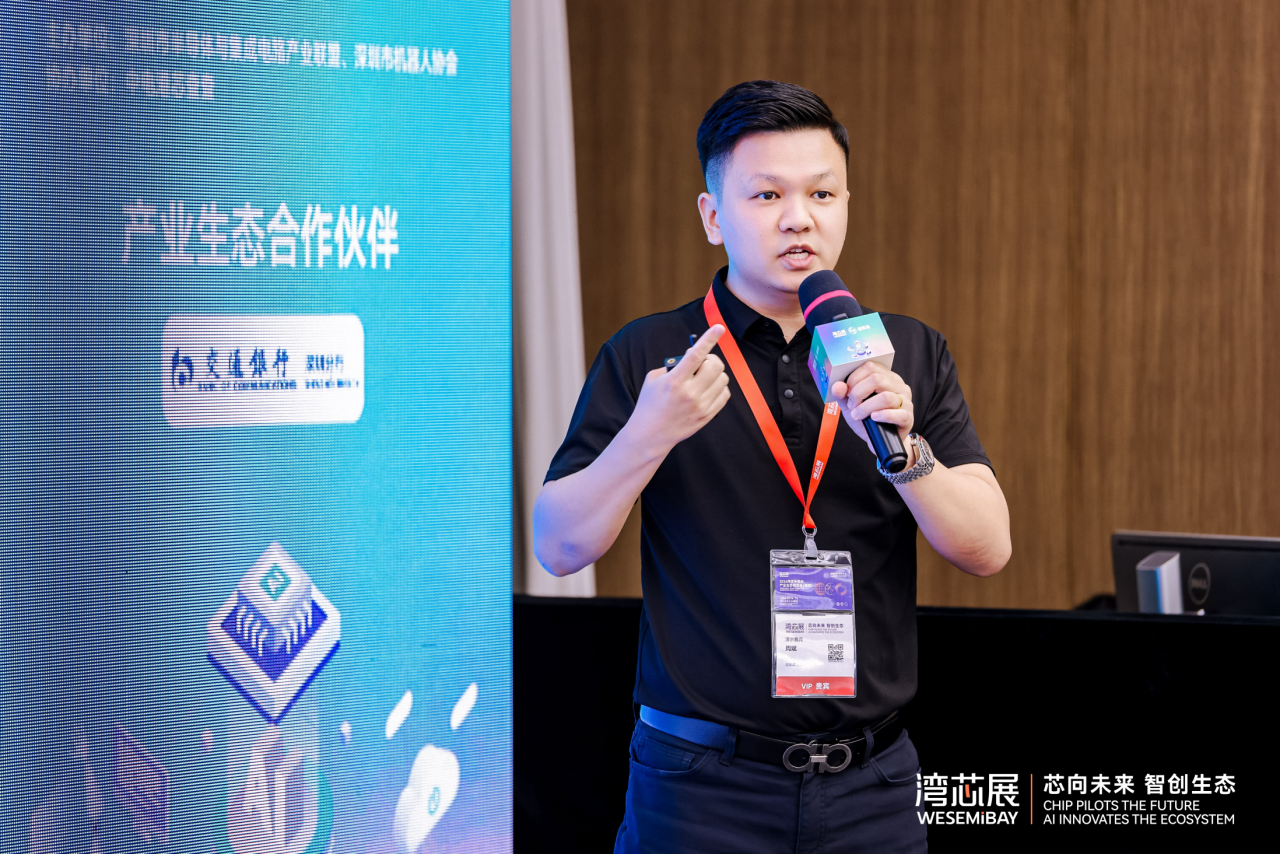
Pictured: Zhou Bin, Account Manager at Molex
Three Pillars of Security: Building Robust Security Across the Entire Lifecycle
Liu Jian, Vice-President of Sanwei Xin’an, stated that‘Hardware-Based Intelligent Security Foundation: Practical Implementation of HSMs and Secure Elements’Under this title, we present a full lifecycle security solution for intelligent unmanned devices.
This paper discusses risks such as command hijacking, programme tampering, model theft, identity spoofing and malicious upgrades, and proposes a security architecture that integrates cloud-based HSM cryptographic modules with device-side SE security chips and TEE trusted execution environments.
By implementing production line identity-based filling to establish a “one machine, one certificate; one machine, one secret” system, and combining this with trusted boot, command signing, replay protection and OTA verification, the solution extends the chain of trust from the factory to operation and maintenance; standardised SDKs, unified APIs and audit trail capabilities provide security support for mass production and ongoing operations.
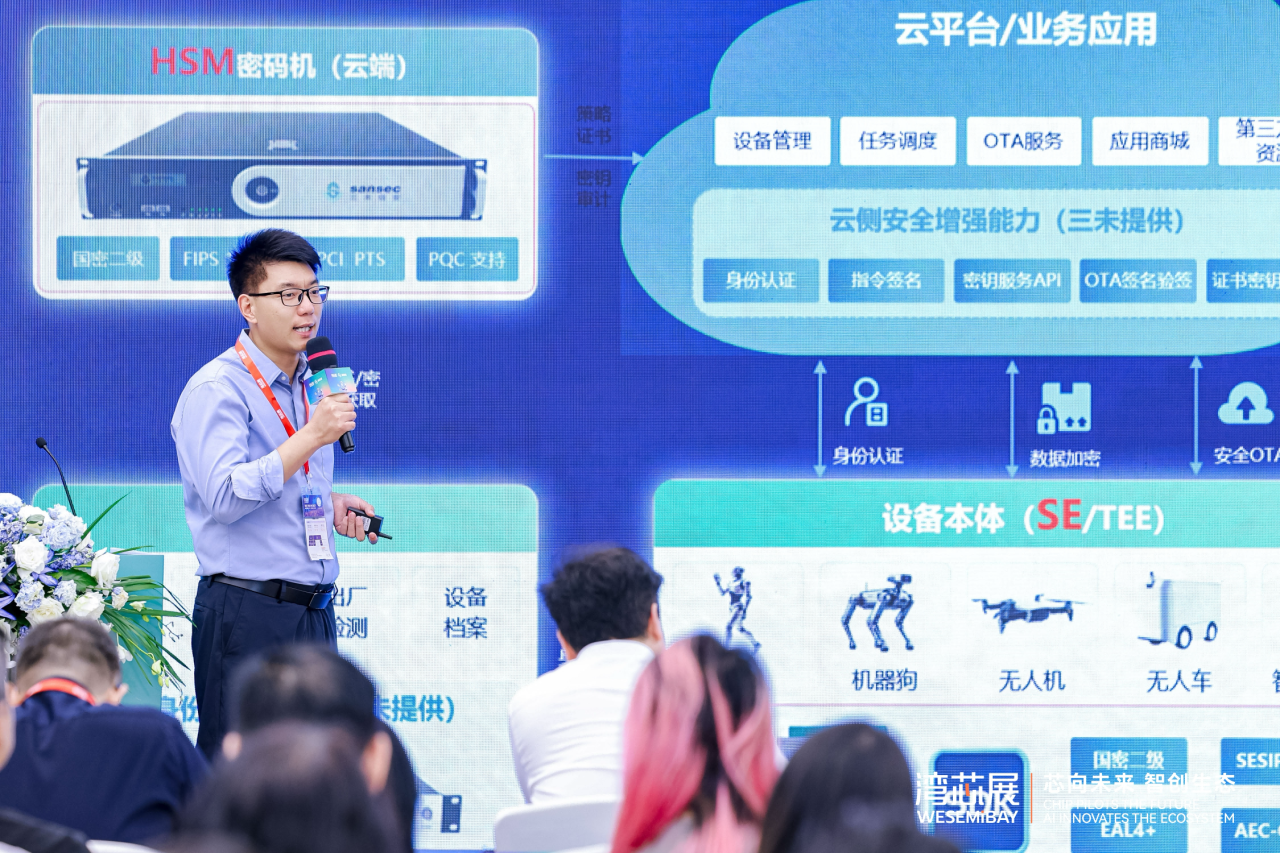
Pictured: Liu Jian, Vice-President of Sanwei Xin’an
Round-table Forum: Exploring the Reconstruction of Chip-Controlled Bases
At the end of the forum,‘Defining the Foundation of Physical AI: The Chip-Driven Reconstruction of Embodied Intelligence’The round-table session will extend the discussion to computing, control, sensing and industrial ecosystem collaboration. Participants include Li Sujun, Operations Director at Zhongdian Gangxin Chacha; Du Xiaolei, Director at Huacheng Industrial Control and Director of the Robotics Sector; Shen Yipeng, Deputy General Manager of CEHX Firefly Workshop; Cao Wang, Director of the Robotics Business Centre at Black Sesame Intelligence; Lu Xingqiang, Vice President of Gejian Semiconductor; Wang Jun, Head of Robotics Business at Melexis; and Li Zhaohan, Head of Embodied Algorithms in the Robotics R&D Department at Jindie Timespace.
The roundtable examined the physical AI infrastructure from the perspectives of different stages of the industrial chain, providing a cross-disciplinary platform for discussion at this forum on robot hardware, algorithms, computing power, control systems and core components.
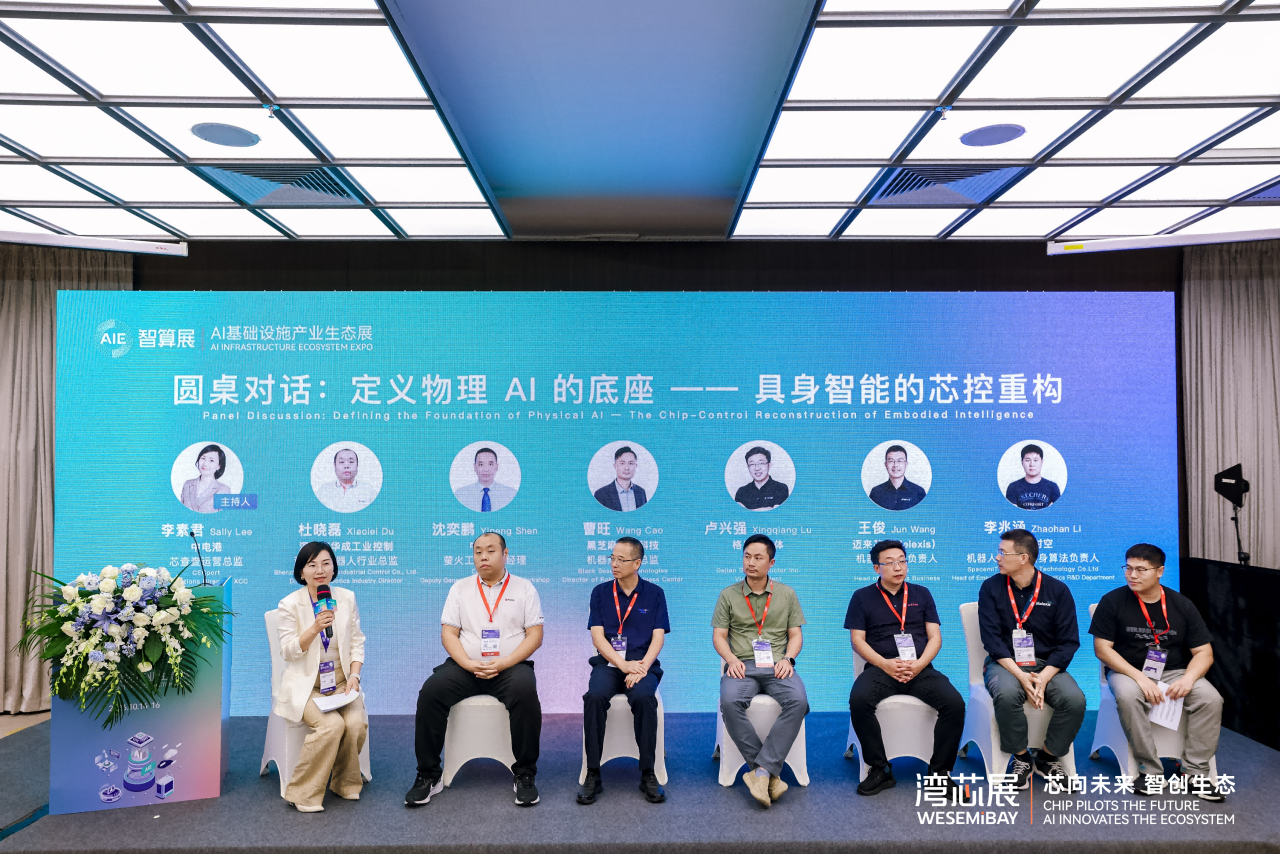
Photo: The round-table discussion in progress
For embodied intelligence to enter the physical world, it requires not only more powerful models and computing power, but also reliable motion execution, interconnectivity, security safeguards and a reproducible manufacturing system; only by taking real-world scenarios as the driving force and promoting collaboration between software and hardware as well as cooperation across the industrial chain can robots move from “performing a single demonstration” to “continuously creating value”. This is precisely the original intention behind the Shenzhen Robotics Association’s co-organisation of this forum—to forge consensus across the industry chain and establish a collaborative platform for the practical implementation of embodied intelligence.
Going forward, the Association will continue to fulfil its role as an industry organisation, working hand in hand with members and industry partners to promote the implementation of embodied intelligence in a wider range of real-world scenarios, utilising platforms such as the FAIR plus Robotics Full Industry Linking Forum. We welcome industry colleagues to follow the Association’s updates and register to participate.FAIR plus 2027, to jointly write a new chapter in “bringing AI into the physical world”.

