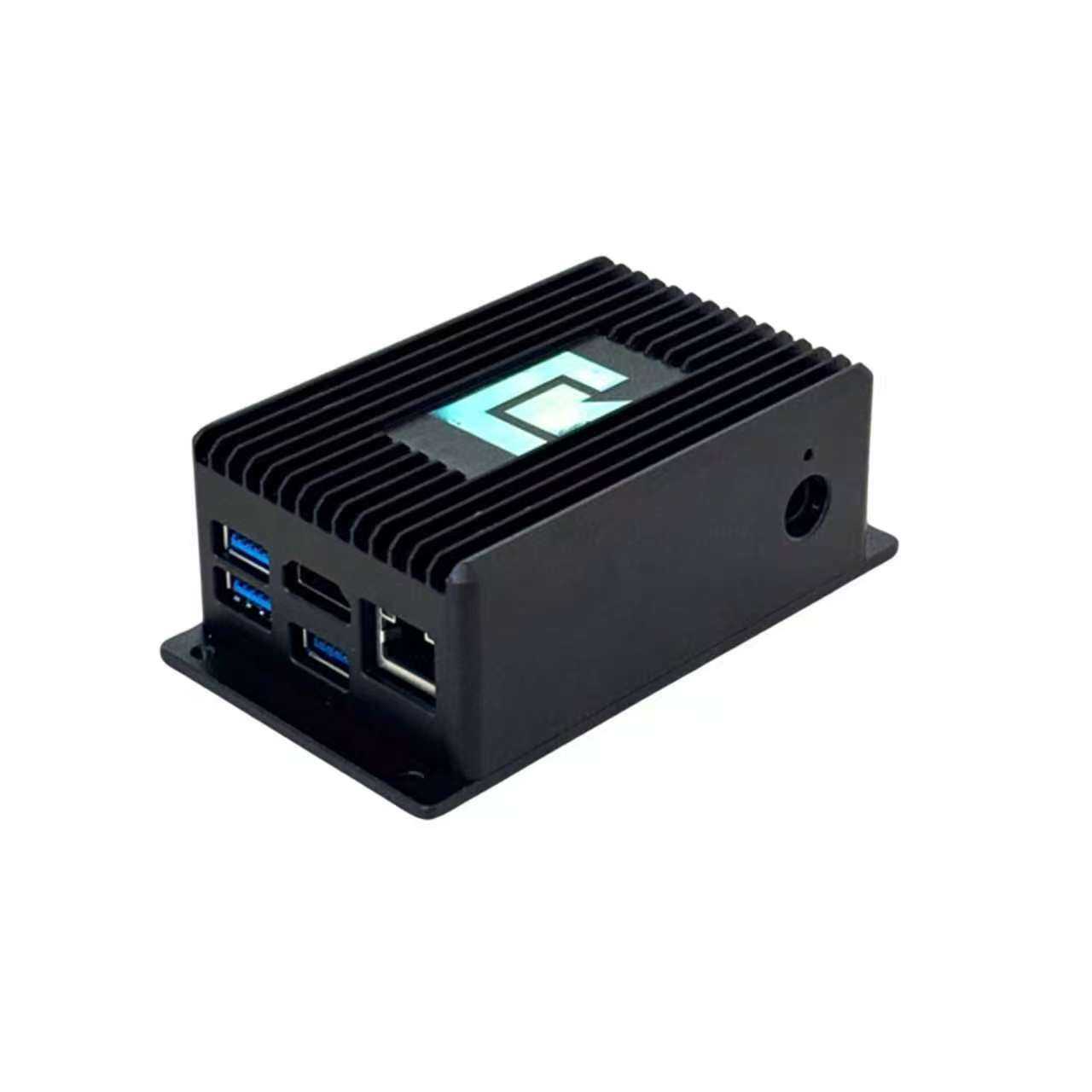
Xiaoqu Intelligence specialises in the research and development of multimodal embodied intelligence and general-purpose navigation solutions for humanoid robots, and is committed to advancing the full-scenario application of humanoid robots. The founding team hails from the Robotics Research Institute at Harbin Institute of Technology (HIT), where they have spent many years specialising in the field of robotics. They collaborate closely with the Bionic Robotics Research Group at HIT’s State Key Laboratory of Robotics Technology and Systems. Leveraging the advantages of industry-academia-research collaboration, the team has addressed core challenges in humanoid robotics—such as multi-joint serial and parallel structures, discontinuous walking gaits, and high-impact motion—by integrating the research group’s theoretical innovations with industry expertise. As a result, they have pioneered the development of a stable, lightweight, and universal multimodal embodied intelligence navigation algorithm in China. This algorithm is adaptable to various robot configurations, including bipedal, quadrupedal and wheeled models, and can operate in both indoor and outdoor structured and unstructured environments, providing robots with safe, rapid and precise navigation support. Building on this core algorithm, the company has launched a range of solutions, including software licensing, integrated control modules and wearable backpack modules, supporting flexible deployment and enabling robots to rapidly achieve autonomous navigation capabilities. It has been successfully integrated with leading humanoid robots from Leju, Effort, Tianlian, Star Motion Era, Zoyide, Zhongqing, Tiangong and Yushu, as well as quadrupedal robotic dogs from Yushu and Cloud Depths. To date, the company’s products have been deployed in bulk across scenarios such as exhibition hall guidance, building services and industrial logistics, with cumulative deliveries exceeding 300 units, making it the first embodied intelligence general-purpose navigation solution in China to achieve mass deployment. Furthermore, the team continues to explore new application scenarios, collaborating closely with the Harbin Institute of Technology’s Suzhou Research Institute to drive the implementation of projects such as petrol station robots and embodied intelligence training grounds; simultaneously, it actively participates in research initiatives, undertaking open-access projects at the Jiangsu Provincial Key Laboratory of Advanced Robotics Technology.


 English (UK)